Charge AR
Services
Visual Identity
UX UI
Client
Charge AR
Location
Milano
Year
2024
Context and Motivation
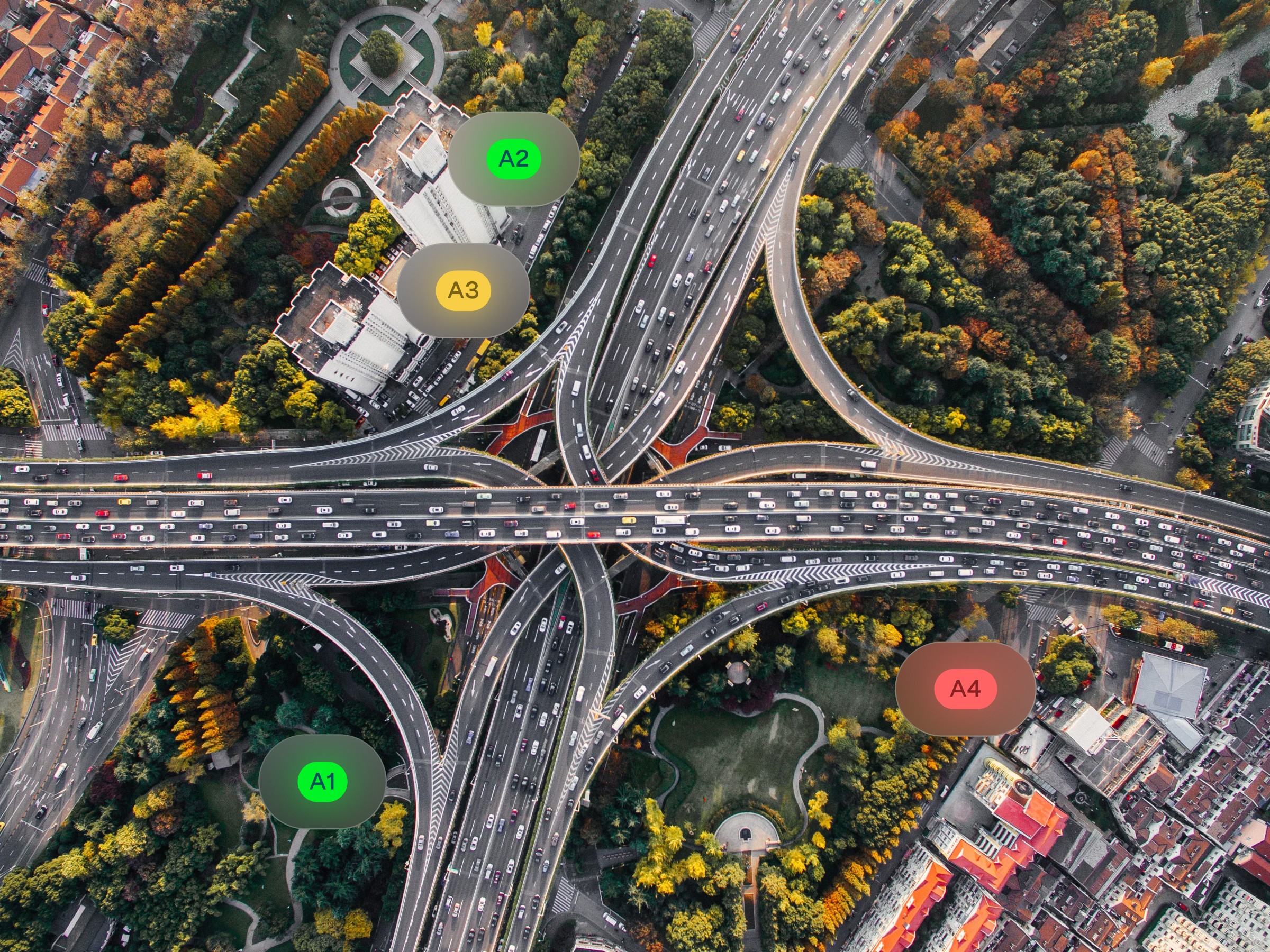
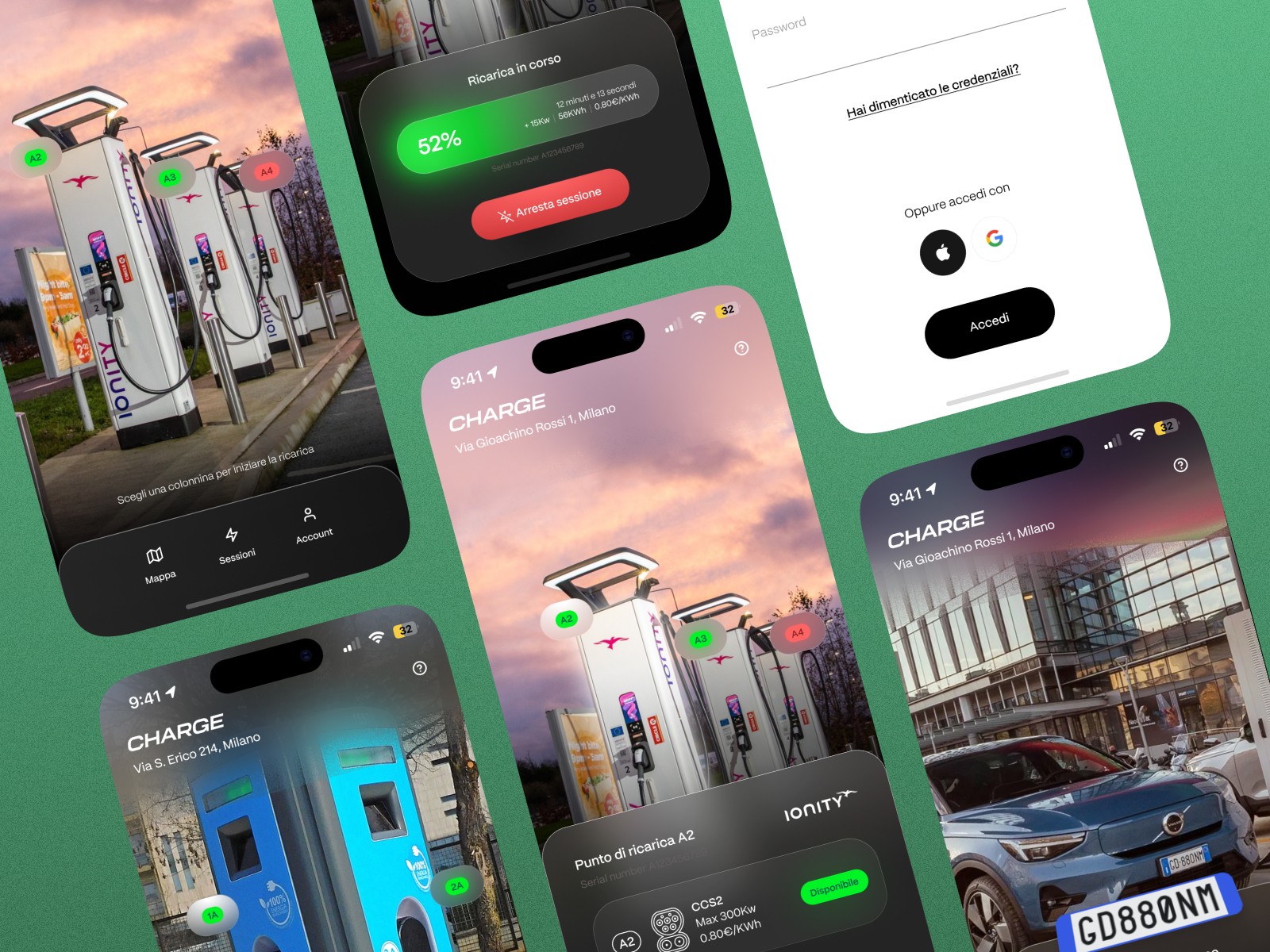
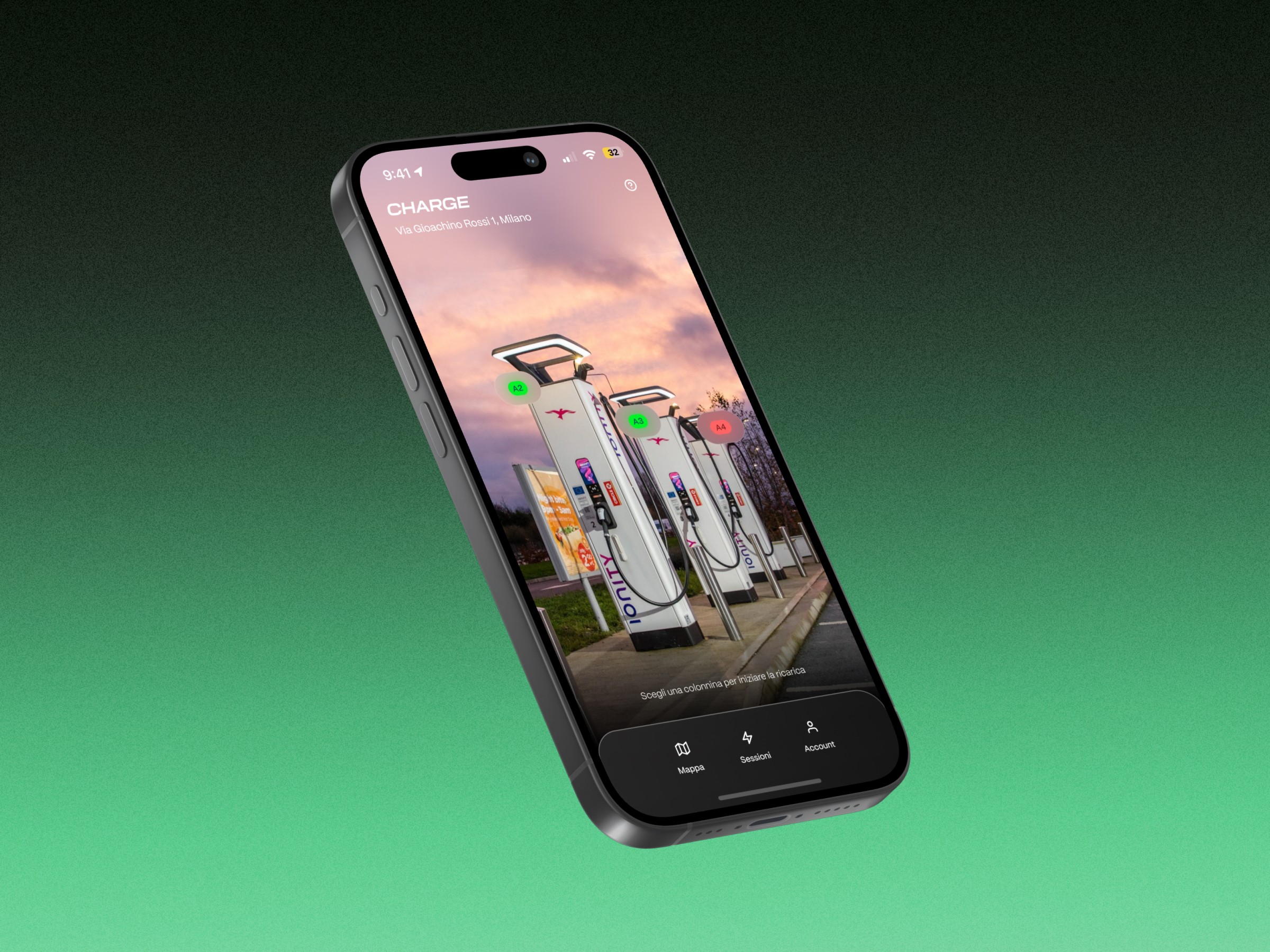
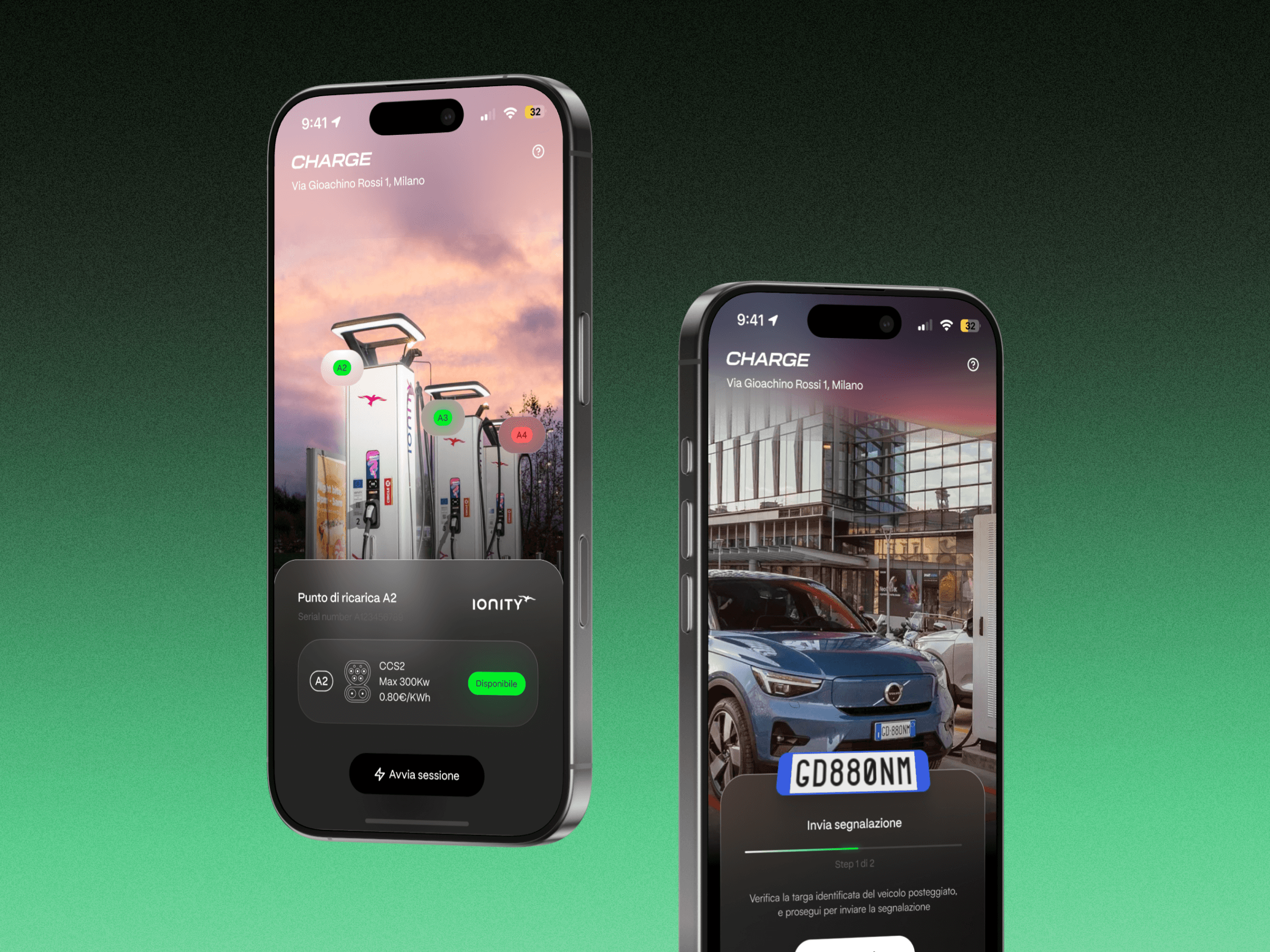
While using public charging infrastructure, I repeatedly faced confusion around charger activation. Port numbering is often unclear, inconsistent or physically degraded, leading to errors and frustration. This problem is widespread but poorly addressed by existing apps. I saw an opportunity to explore how augmented reality could provide immediate, contextual guidance in a real-world environment.
Project Overview
While using public charging infrastructure, I repeatedly faced confusion around charger activation. Port numbering is often unclear, inconsistent or physically degraded, leading to errors and frustration. This problem is widespread but poorly addressed by existing apps. I saw an opportunity to explore how augmented reality could provide immediate, contextual guidance in a real-world environment.
Goals and Challenges
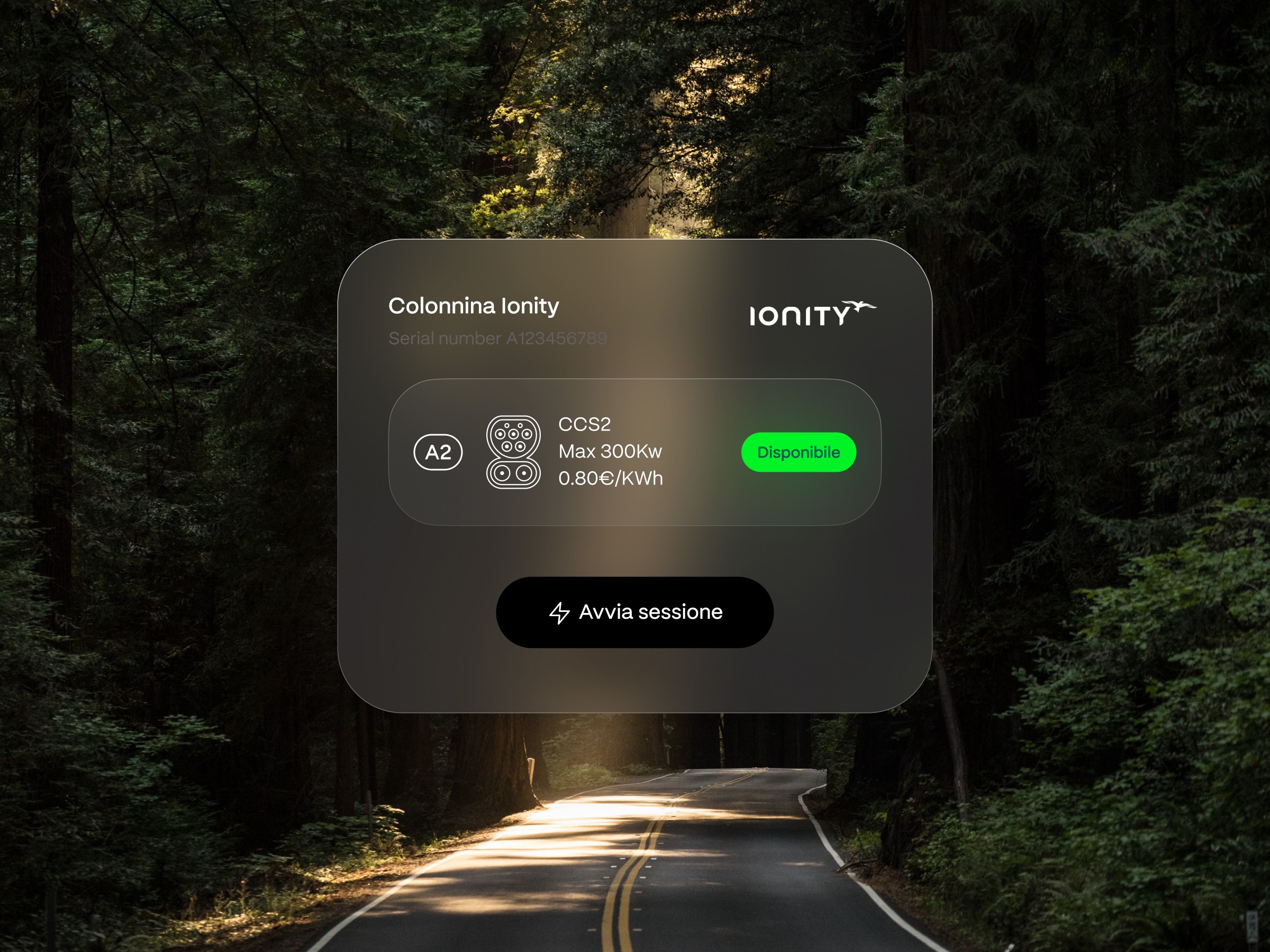
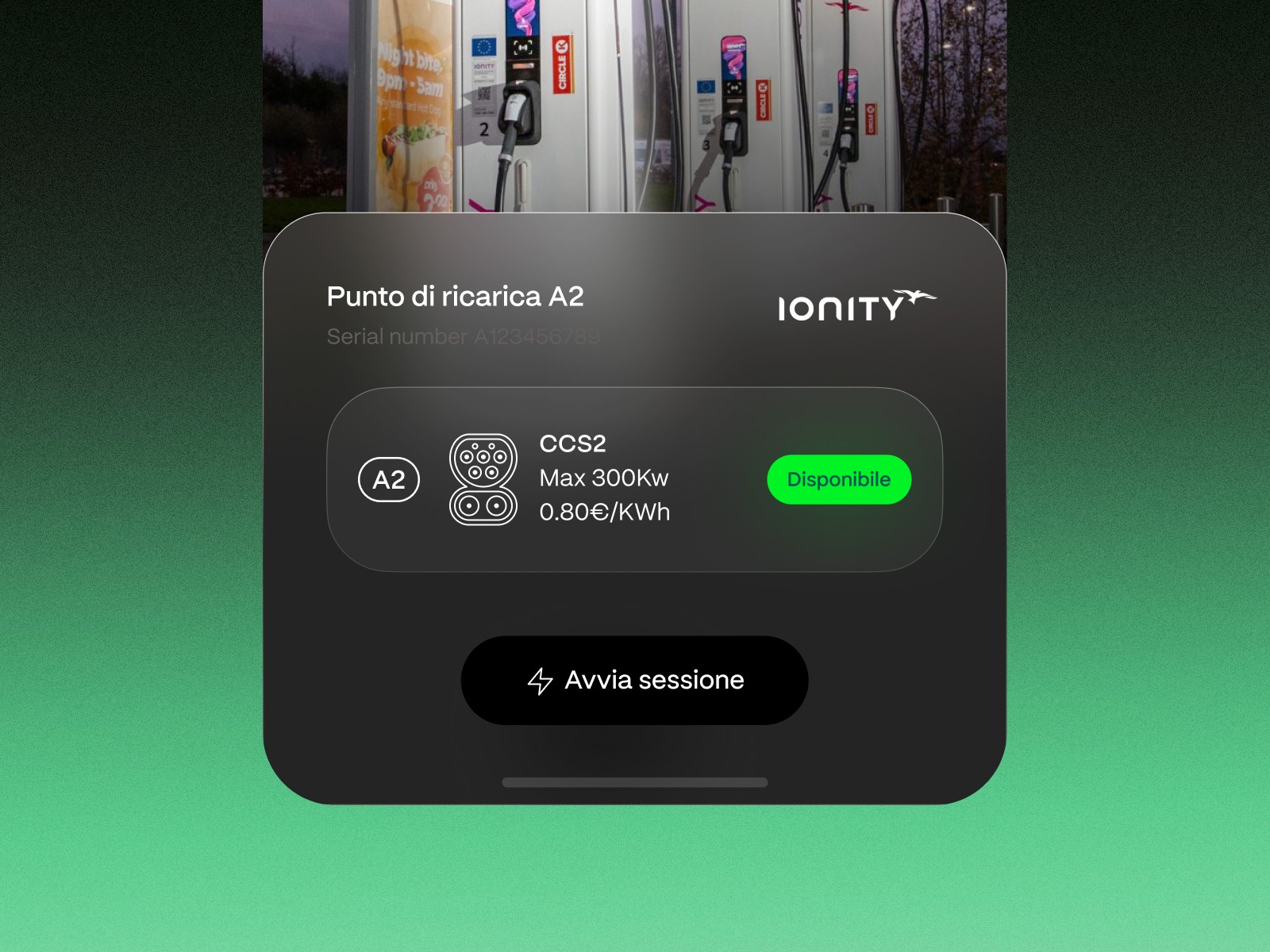
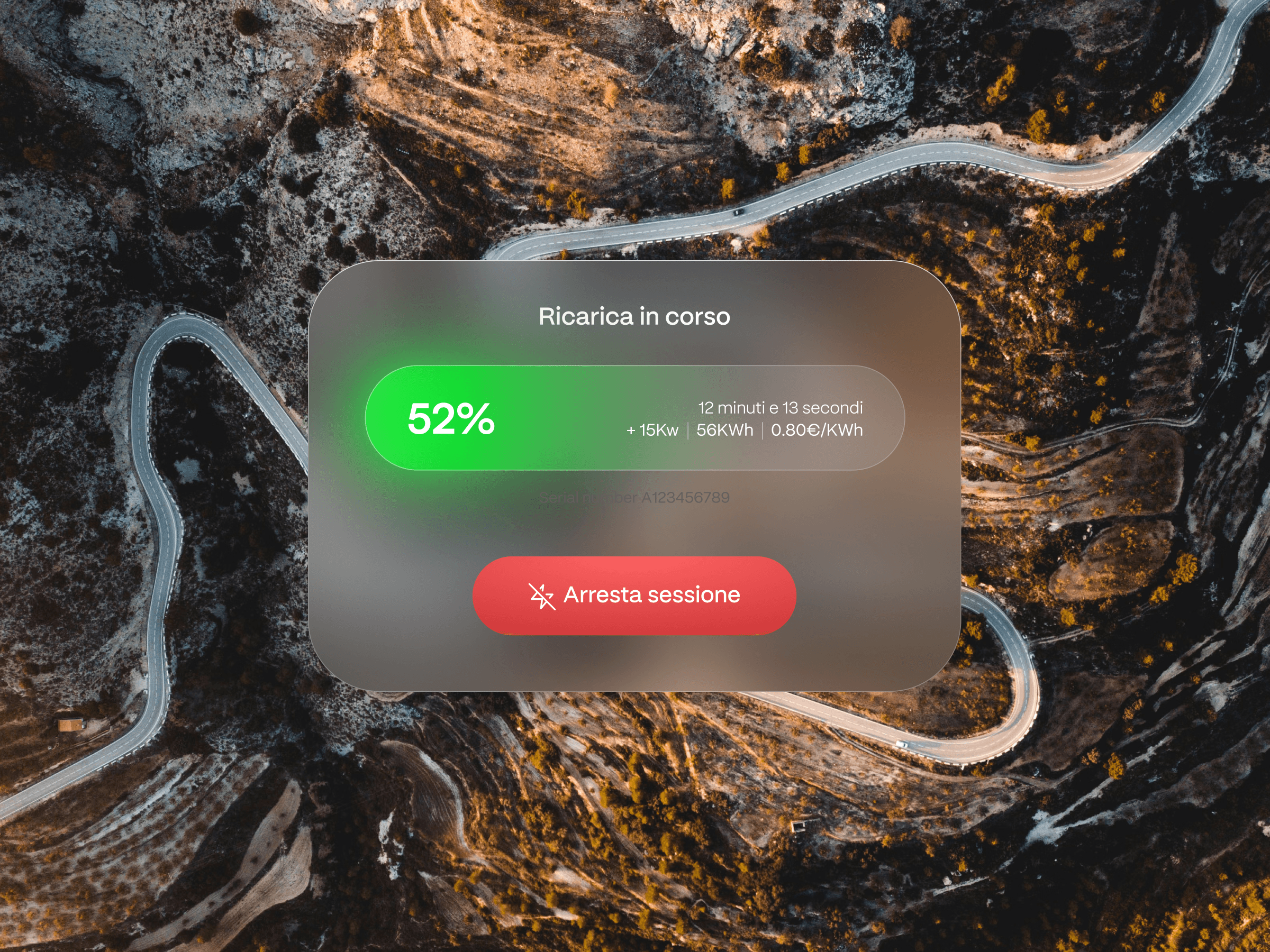
The goal was to design an AR experience that simplifies charger selection and activation, without adding cognitive load or visual noise. A major challenge was ensuring the interface could be used comfortably with one hand, in outdoor conditions, and across different charging providers with inconsistent physical layouts.
My Role and Responsibilities
This was a self-initiated project where I handled research, concept design, UX and interaction design. I also conducted user research by engaging with EV communities on WhatsApp, Facebook and Telegram to validate the problem and understand real usage patterns.
Design Process and Decisions
User research revealed that over 70 percent of respondents experienced similar issues with charging station identification. Based on these insights, I designed an AR interface that overlays clear, contextual information directly onto the physical environment. The focus was on functional clarity rather than visual spectacle, ensuring the experience remained usable and intuitive in real conditions.